
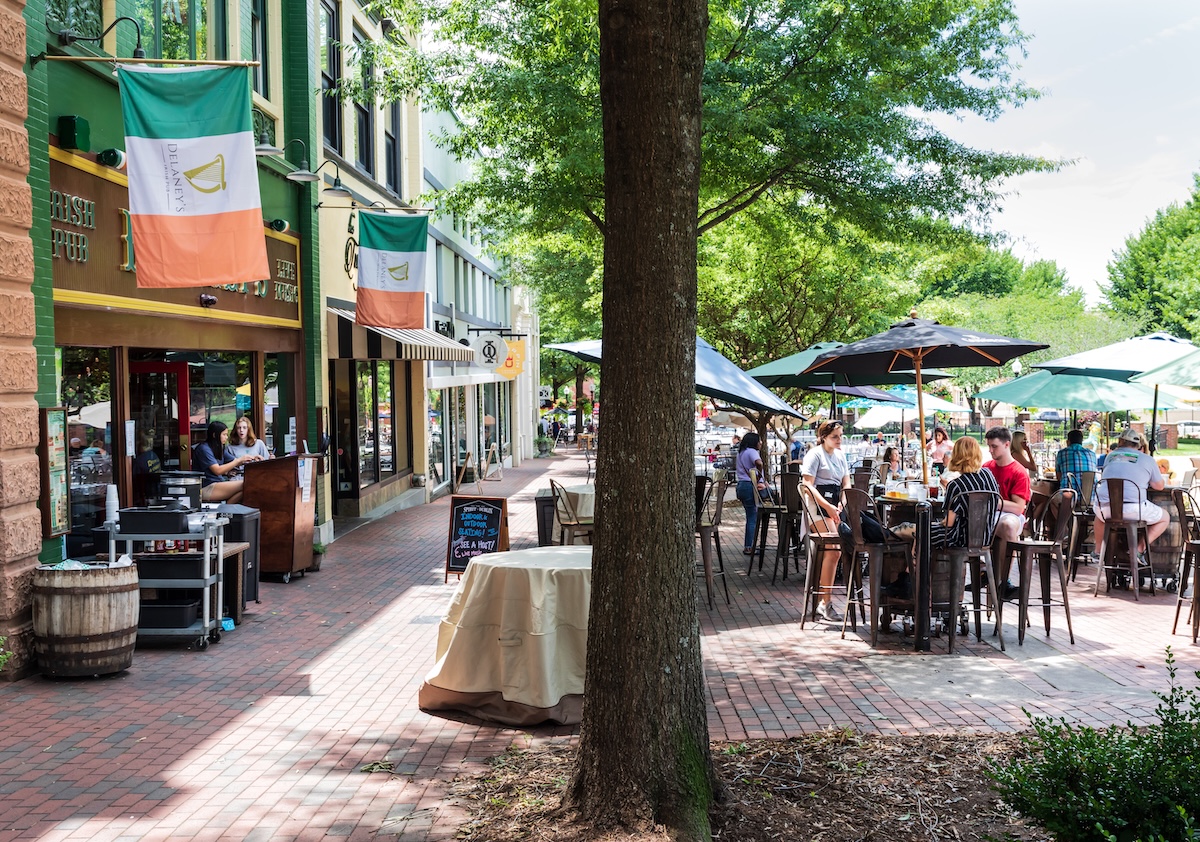
Historic streets, local culture, and a relaxed small-city atmosphere give this underrated destination plenty of Southern character. While deeply connected to South Carolina’s past, it also has a creative and family-friendly side that makes it easy to explore at a slower pace.
Located in the Upstate region of South Carolina, Spartanburg takes its name from a militia regiment active during the American Revolutionary War. Historic sites such as Walnut Grove Plantation reflect that long history, while natural areas like Hatcher Garden and Woodland Preserve and Glendale Shoals offer a quieter side of the region.
Compact and easy to navigate, Spartanburg combines history, outdoor spaces, and local attractions in a way that makes it especially appealing for relaxed weekend trips and family visits.
Barnet Park

In downtown Spartanburg, the spacious Barnet Park is home to an accessible and paved two-mile walking trail, an interactive water fountain for those hot summer days, along with a large picnic pavilion for group gatherings. With ample room to run and play games, it’s easy to see why Barnet Park is a popular destination.
A highlight of Barnet Park is the Zimmerli Amphitheater. With a capacity to seat 1,000 people, with room for many more on the surrounding lawns, the amphitheater plays host to major festivals and community events throughout the year. Many of the public concerts are free, making it a top choice for couples, friends and family looking to enjoy some live entertainment.
Anderson’s Mill

Built in the latter 1800s, Anderson’s Mill is a well-preserved historical building in Spartanburg. The mill is a water-powered gristmill that has undergone many iterations over its life and has also been known as Nicholl’s Fort and Tanner’s Mill.
Regardless, it’s the oldest still-standing mill in South Carolina and remained in operation until 1975. Along the North Tyger River, the mill is an especially beautiful place to visit in the fall, with the auburn foliage providing a gorgeous backdrop. After exploring the mill, find a cozy spot along the river and take in the natural scenery.
Glendale Shoals Preserve
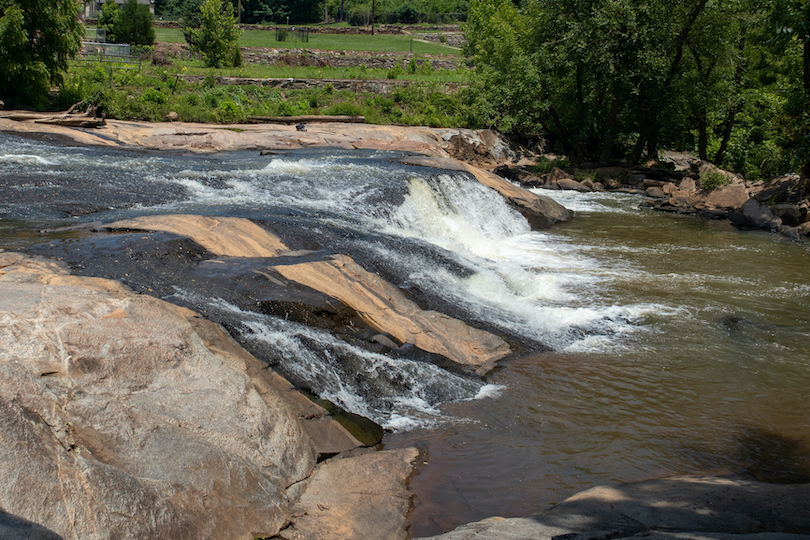
Fun for photographers, hikers and birdwatchers, there’s lots to do in Glendale Shoals Preserve. Along Lawson’s Fork Creek, where the old Glendale Mill once operated, you can explore the serene landscape on foot, complete with a dam, a waterfall and plenty of space for a family picnic.
The many hiking trails meander throughout the preserve, some leading you to the ruins of the Glendale Mill, which was built in the 19th century. The mill played a major role in local life, supporting the community with its enormous cotton factory.
Aside from historical buildings, you’ll discover ample nature with the diverse range of plant life home for many types of birds.
The Peachoid

A 30 minute drive northeast of Spartanburg is a 135 foot water tower in the shape of a peach. The intriguing roadside attraction can hold up to one million gallons of water. Known to locals by several names, including The Peach, Mr Peach and the Moon over Gaffney, you can easily spot the monument from miles away.
The peach design was chosen as Gaffney is a part of Cherokee County, who in 1980 produced more of the fruit than the entirety of Georgia, known as the “Peach State”. The colorful water tower was an immediate hit and has gone on to become a unique tourist attraction and was even involved in a plotline of the show House of Cards.
Walnut Grove Plantation
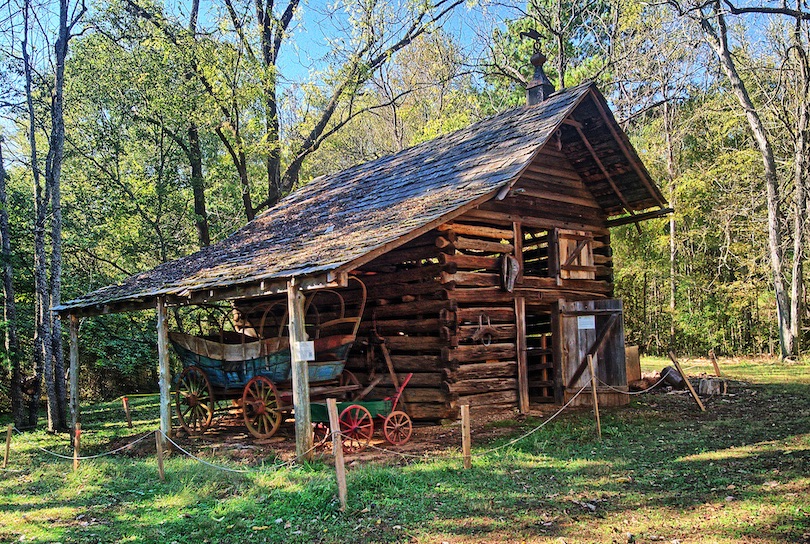
Near the Tyger River, the history of the Walnut Grove Plantation dates all the way back to the American Revolution. With land rights granted by King George the Third, the Moore’s built the original home in 1765 with the help of slaves, who’re said to be some of the first in the region.
Fast forward two centuries and the plantation became a public museum. Visitors have a chance to not only explore the history but also the tragedy linked to the plantation from which the surrounding towns, including Spartanburg, grew.
The home has been well-preserved throughout the years and is one of a few remaining homes from the period in South Carolina’s upcountry. Explore the home to learn the earliest stories of Spartanburg, including the Moore family and the lives of slaves on the plantation.
BMW Zentrum

As the only BMW Zentrum museum not just in South Carolina but in North America as a whole, a trip to Spartanburg is an envious opportunity to learn all about the iconic car company. The museum strongly focuses on the brand’s early years, providing an insight into the development of BMW and how it managed its rise to fandom.
The BMW Zentrum has many incredible exhibits, including the famous Isetta Bubblecar from the 1950s, perhaps the strangest car BMW ever made. Other highlights include the company’s history of racing and an exclusive collection of rare models and classic cars.
Spartanburg Historic District

A great way to get to know Spartanburg is to spend some time wandering through the Historic District. The area was listed on the National Register of Historic Places in 1983 and is based around Morgan Square, home to a statue of Daniel Morgan, a prominent local figure.
Around the square you’ll find beautiful examples of the town’s original architecture with many of the buildings from the 1800s and the early 20th century. Featuring Roman influences, these buildings were once home to a thriving textile industry, along with the present day Cleveland Hotel and local waterworks.
So grab a coffee and explore on foot to get a glimpse of Spartanburg as it was at the turn of the 20th century.
Croft State Park
The sprawling Croft State Park is home to over 20 miles of hiking and biking trails for you to enjoy. If it’s a beautiful day in Spartanburg, then there may be no better place to go. Load up the picnic basket and head to the rushing rivers that surge through the park for a shady picnic surrounded by peaceful nature.
When you’re ready for some adventuring, join one of the many trails through the park and explore the local forest. The Croft State Park also features two large lakes, which are great fishing and boating spots for those that wish to get out on the water.
For those with families, you’ll find playgrounds and the opportunity to further explore on horseback thanks to the resident equestrian facilities.
Hatcher Garden and Woodland Preserve
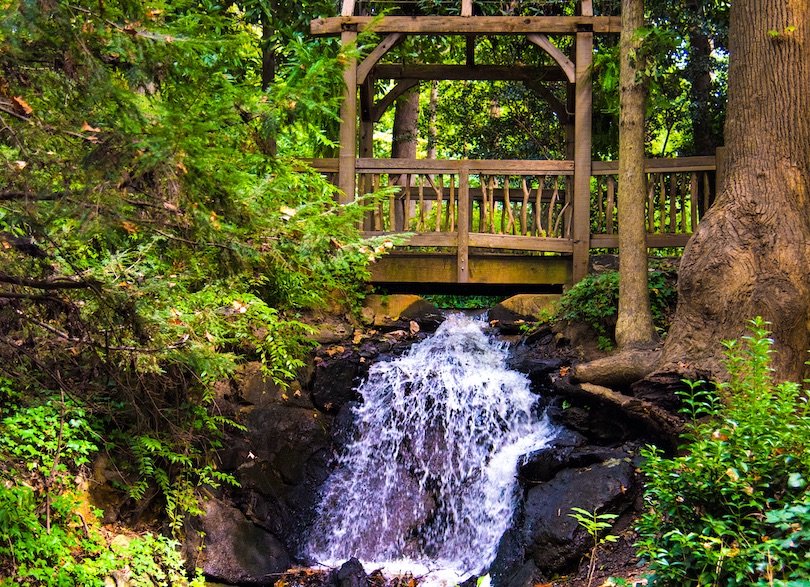
Along a variety of scenic walking trails, you can explore the beautiful conifer forests in the Hatcher Garden and Woodland Preserve. Through the pristine environment, you’ll discover over 200 species of trees and plants, including towering pines, firs, sequoias and spruces.
Open year-round between sunup and sundown, the park is easy to access and you’ll find stunning perennials to complement the giant conifer trees in the ornate gardens. While the Woodland Preserve allows visitors to stroll along meandering creeks on their way to charming ponds and a cascading waterfall.
Joining you will be a variety of wildlife, especially birds who flutter through the air before hanging out in the canopy. There are also a selection of ranger-led walks and programs that will further explore the tranquil environment.