
When travelers grow weary of navigating an ocean of tall buildings and heavy traffic, it may be time to set sail for the sea of tranquility, an oasis in a concrete jungle. Public parks are just the ticket.
Located in the downtown areas of major cities, their greenness is a delight to the senses. Tall green trees abound; there are flowering shrubs, ponds or a waterfront and trails made for strolling or jogging, with maybe even a zoo or aquarium nearby. Sounds of the city are muted.
28. Tiergarten, Berlin
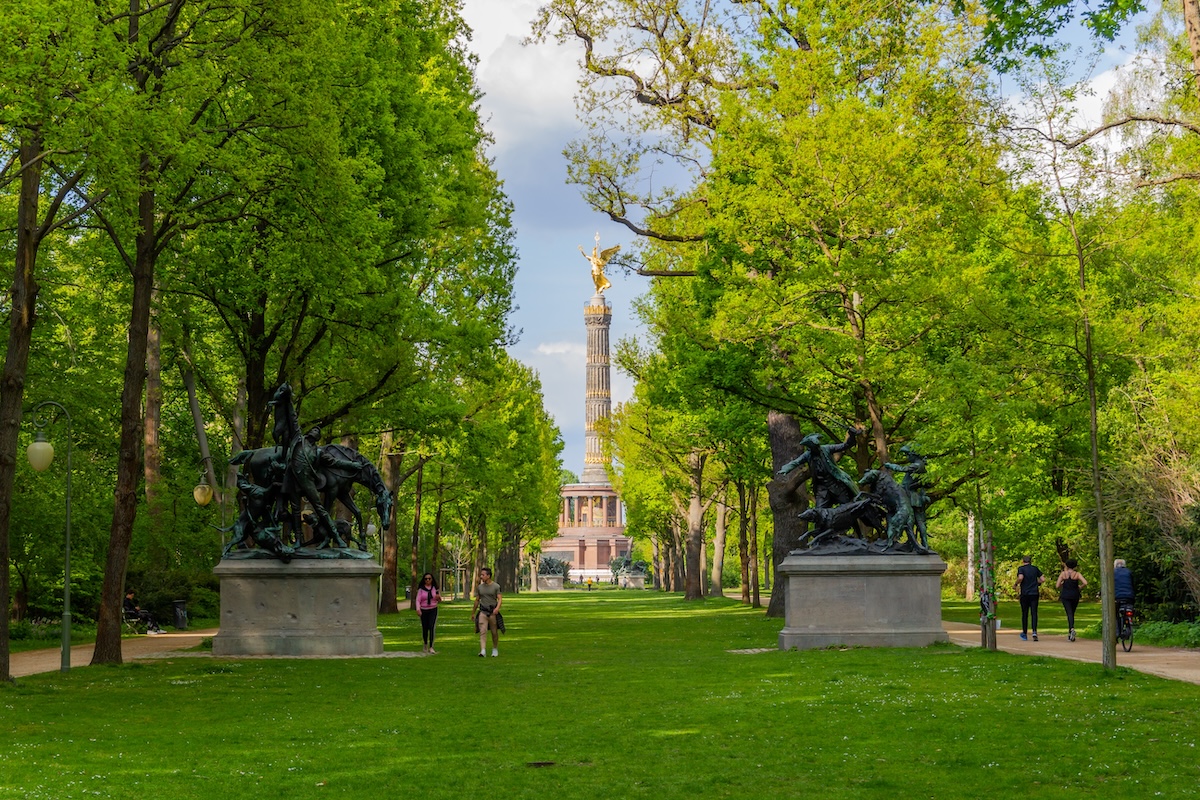
Right in the middle of Berlin, you’ll stumble onto one of Europe’s largest urban parks. Tiergarten covers 210 hectares—it’s even bigger than Hyde Park in London.
Royalty once used Tiergarten as a private hunting ground. Now, locals and tourists fill the park every day, walking or biking along miles of leafy paths.
Major landmarks like the Brandenburg Gate and the Reichstag sit nearby. Inside the park, you’ll spot the Victory Column with its golden statue. If you’re up for it, climb to the top for sweeping views of the city and park. Tiergarten is also home to the Berlin Zoo, which opened in 1844 and now houses about 13,000 animals.
27. Gardens by the Bay, Singapore
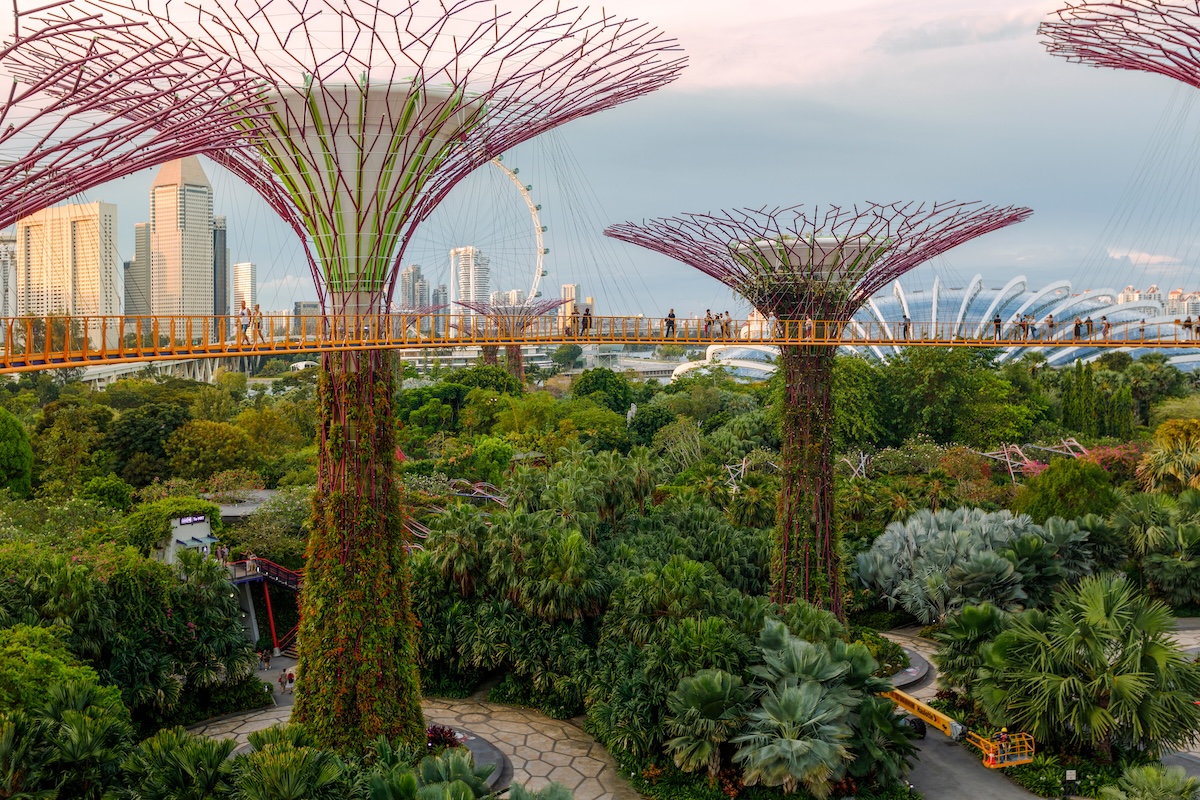
One of the world’s most futuristic parks sits right in downtown Singapore. Gardens by the Bay covers 105 hectares along the waterfront beside Marina Bay.
The Supertrees—towering metal structures up to 16 stories high—are covered in real plants and glow with colorful lights at night. You can stroll between them on a skyway that overlooks the gardens. Two huge glass domes shelter plants from all over. The Flower Dome, the world’s biggest greenhouse, stays cool despite Singapore’s heat. The Cloud Forest features a 35-meter indoor waterfall surrounded by lush mountain plants.
Since opening in 2012, the gardens have become a symbol of Singapore’s “City in a Garden” vision. You can wander three waterfront sections where nature and tech blend in ways you won’t see in most city parks.
26. Phoenix Park, Dublin
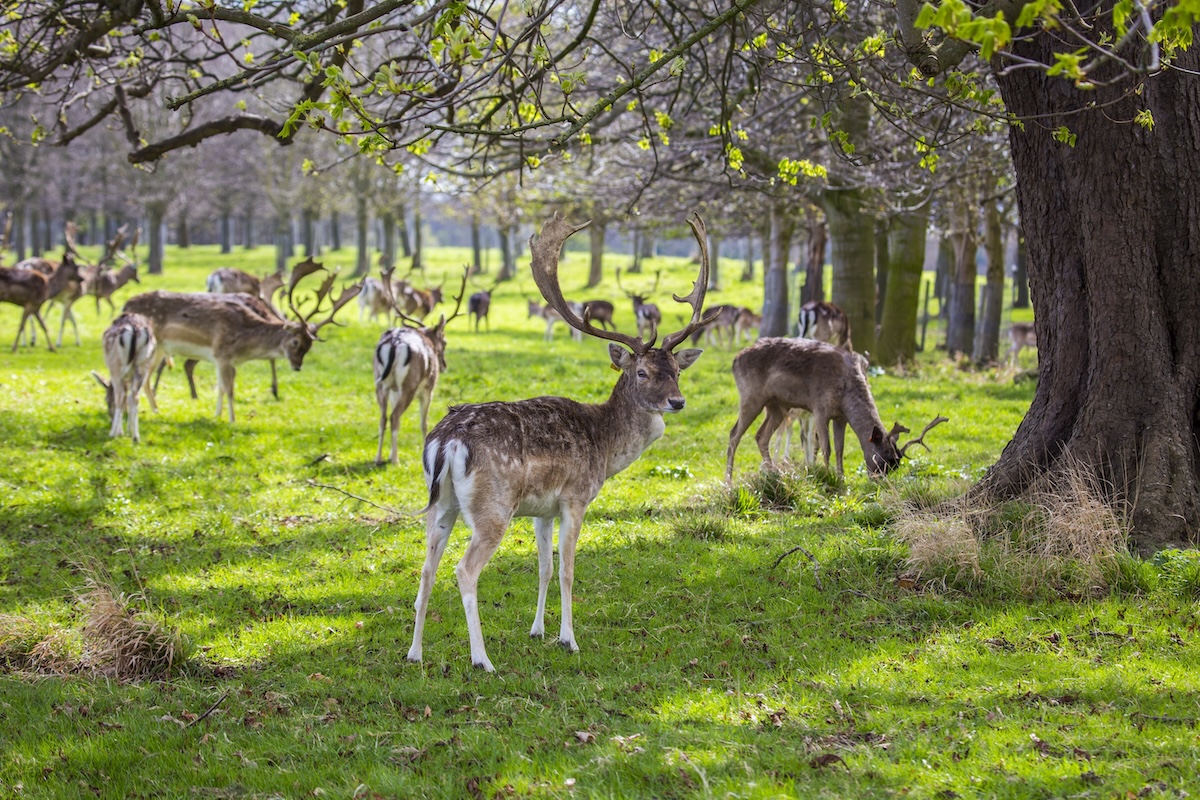
Think you need to leave Dublin to see wild deer? Phoenix Park will change your mind. Just two miles from downtown, this giant park covers over 1,750 acres, making it one of the largest enclosed public parks in any European capital.
It began in the 1660s as a royal hunting ground for King Charles II, and wild deer still roam the grasslands today. You can spot them grazing as you wander the paths.
Phoenix Park opened to the public in 1747. Now it’s an escape without actually leaving the city. The park includes Dublin Zoo, historic buildings, and miles of trails. You’ll find woodlands, open fields, and quiet corners that feel far from the city.
25. Boboli Gardens, Florence
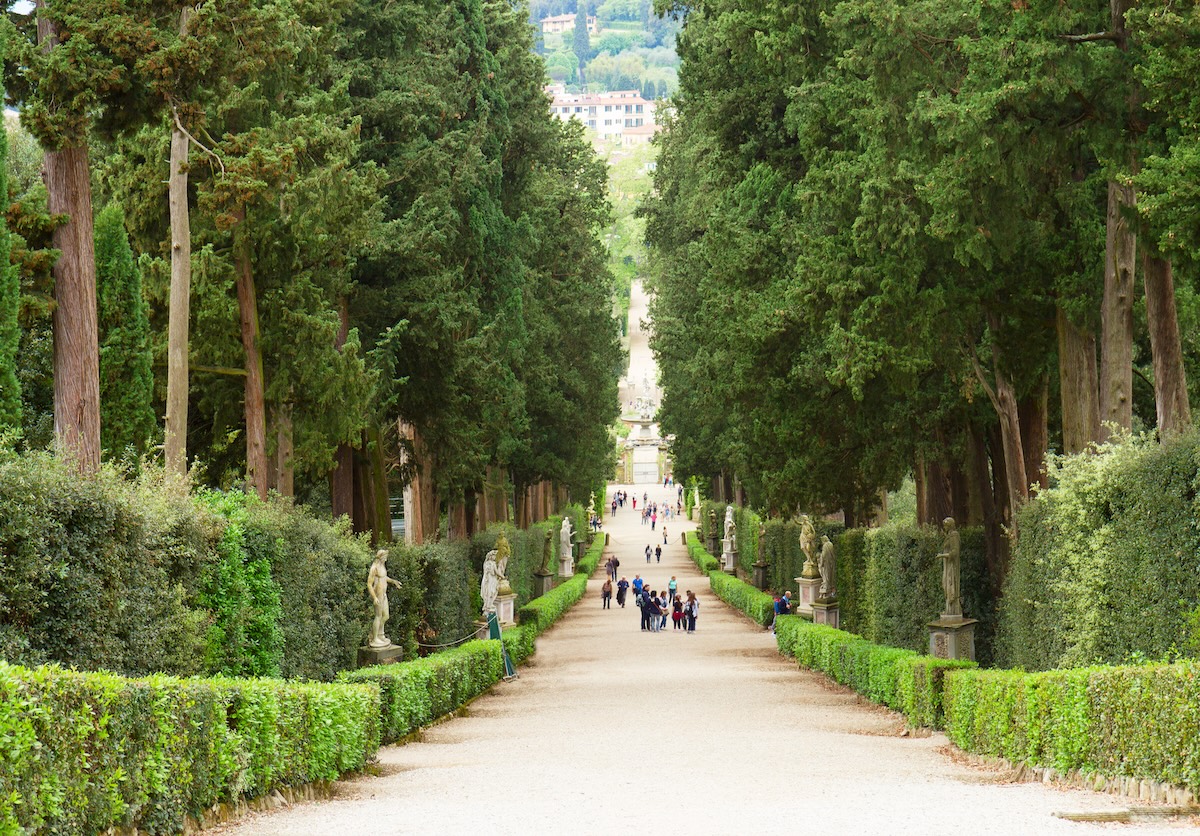
It’s a little wild to discover a huge Renaissance park tucked behind a palace in Florence, but that’s the Boboli Gardens for you.
The Medici family designed these gardens in the 1500s, transforming the hillside behind Pitti Palace into one of the first formal Italian gardens. It became so iconic that other royal courts tried to imitate it. Today, you still see the careful planning the Medicis loved—rows of hedges, fountains bubbling under ancient oaks, sculptures around every turn.
The gardens opened to the public in 1766. Now they’re Florence’s biggest park and part of the Uffizi Galleries. You can wander grottoes, climb terraces for city views, and actually escape the crowded streets below.
24. Retiro Park, Madrid
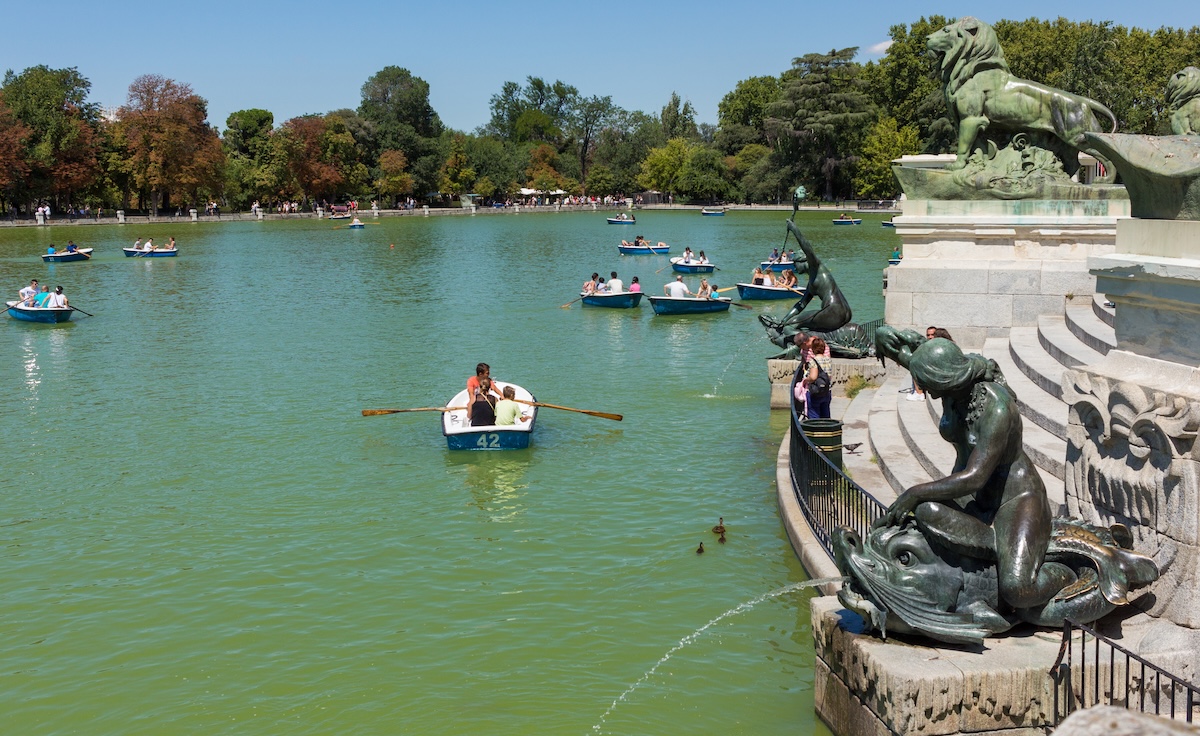
Right in Madrid’s center, 350 acres of green space offer a break from the city buzz. Retiro Park is a go-to spot for locals and visitors alike.
You can rent rowboats on the lake or check out the Crystal Palace, one of the park’s coolest features. Rose gardens and shady trees are perfect for relaxing.
On weekends, street performers—musicians, jugglers, artists—bring the park to life, and families fill the trails, especially on Sundays. Whether you want a quiet bench or a long stroll, Retiro Park has options without ever leaving the city.
23. Boston Common, Boston
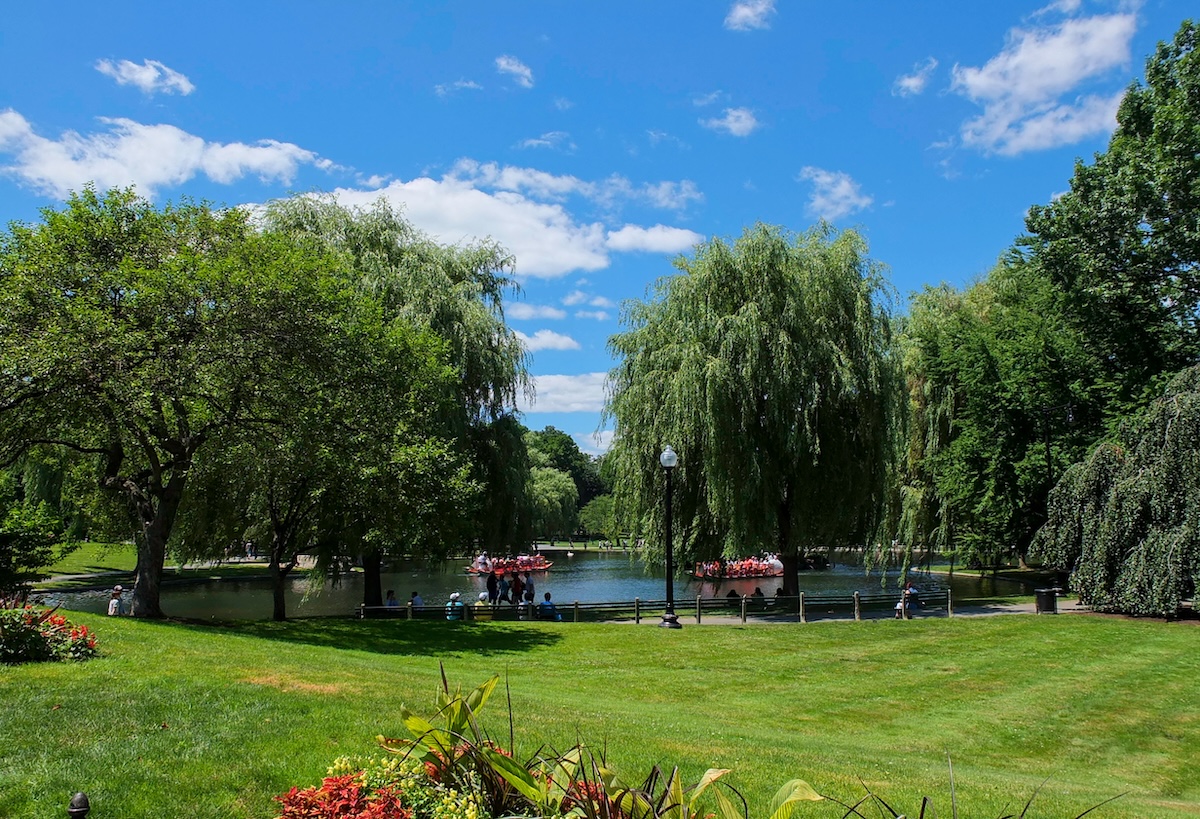
Boston Common sits right in the heart of downtown—50 acres of green that’s been there since 1634, making it the oldest public park in the U.S.
Busy streets like Tremont, Park, and Beacon surround the park. In winter, you can skate at Frog Pond, and when it’s warm, kids splash around there. Ball fields and playgrounds give everyone a place to hang out. Boston Common is part of the Emerald Necklace, a chain of parks running through the city. The Central Burying Ground adds to the park’s historic vibe.
Millions visit every year. If you’re lost, the visitor info center on Tremont Street can help you get your bearings.
22. Djurgården, Stockholm
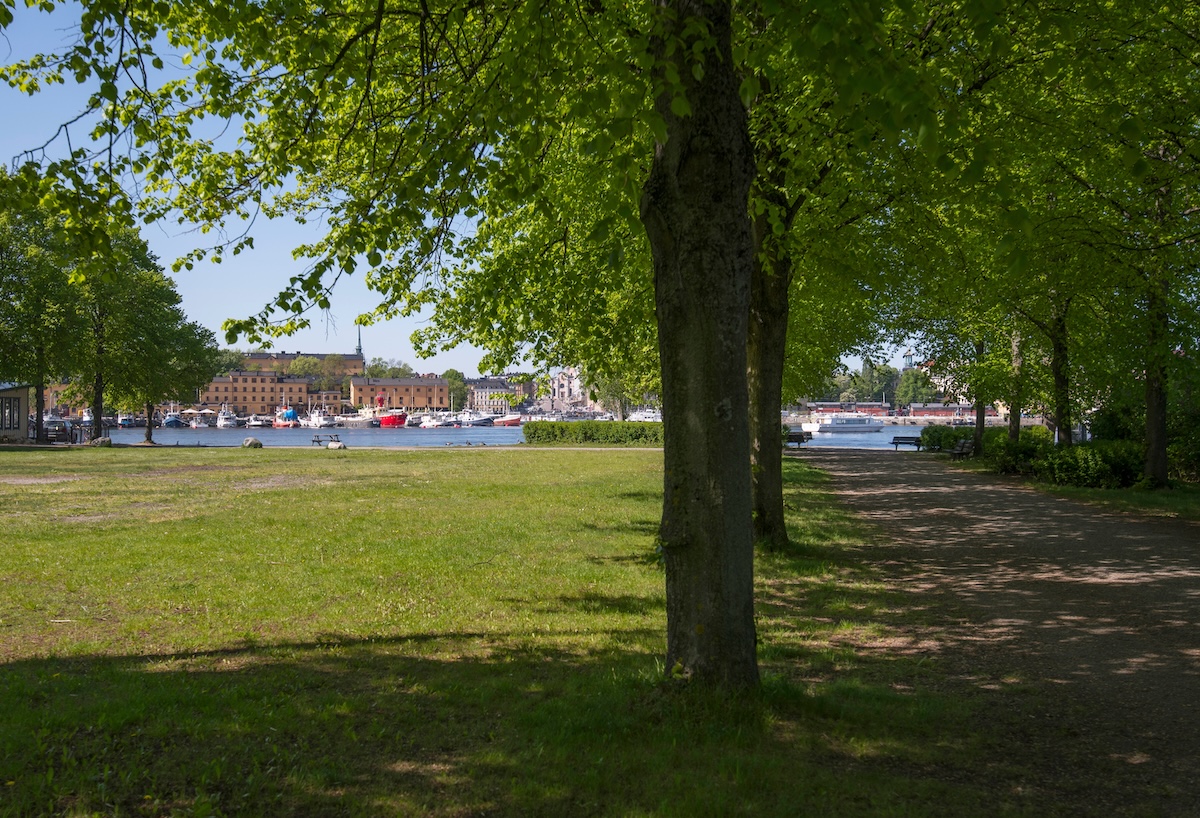
Imagine leaving a high-tech museum and, within minutes, walking through forest where deer wander. That’s Djurgården in Stockholm for you. This island sits right in Sweden’s capital, covering 279 hectares and connected by four bridges. It’s honestly hard to believe such a wild space exists in a city center.
Djurgården forms part of the world’s first national city park, created in 1995. The green arc stretches over six miles through Stockholm. You might spot foxes, moose, hares, or rare birds during your visit.
The island also squeezes in top museums, the Gröna Lund amusement park, and the open-air museum Skansen. Best part? It’s free, 24/7.
21. Lodhi Garden, New Delhi
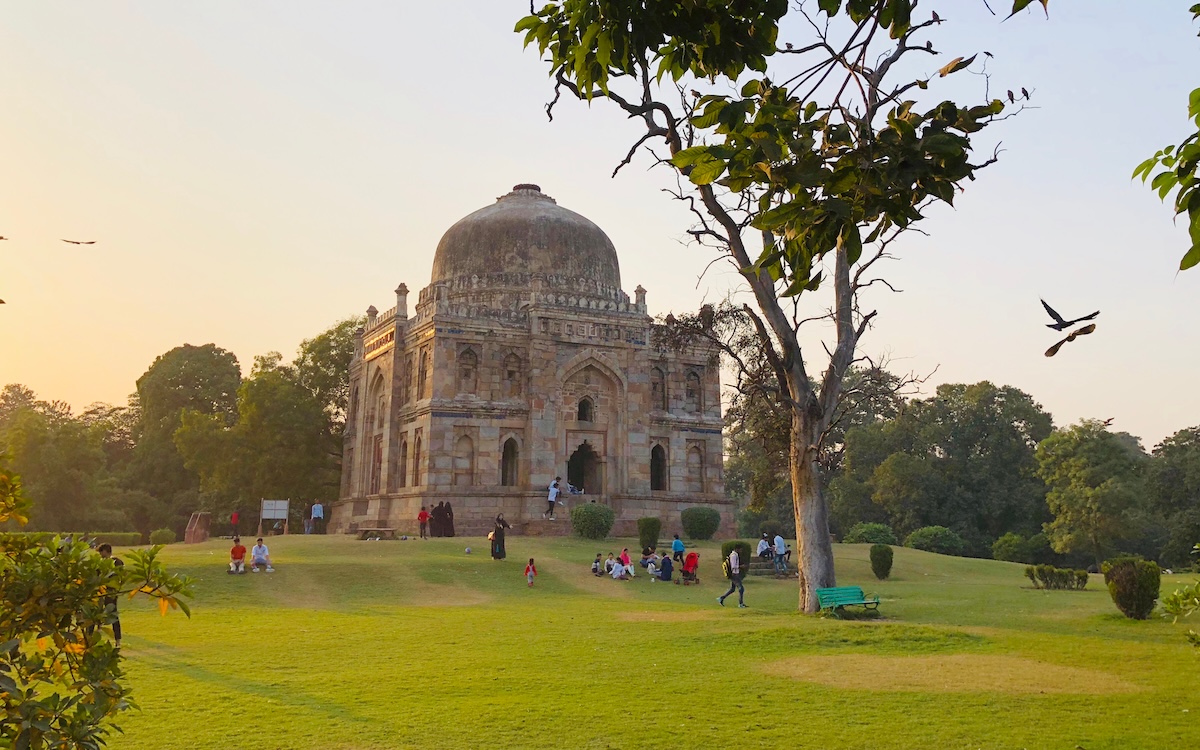
It’s surprising to find a 90-acre green oasis in the middle of New Delhi, but Lodhi Garden delivers just that. It opened in 1936 as Lady Willingdon Park.
The garden sprawls across central Delhi and offers much more than grass and trees. Fifteenth-century tombs stand right along the paths, so you can explore ancient monuments while birds sing and locals jog past.
Lodhi Garden has become Delhi’s favorite escape from the noise. It’s part archaeological site, part nature sanctuary, and part hangout spot all at once. You’ll see exotic plants and rare birds throughout. Somehow, the park feels completely separate from the chaos outside, even though you’re still in the capital’s heart.
20. Parque Lage, Rio de Janeiro
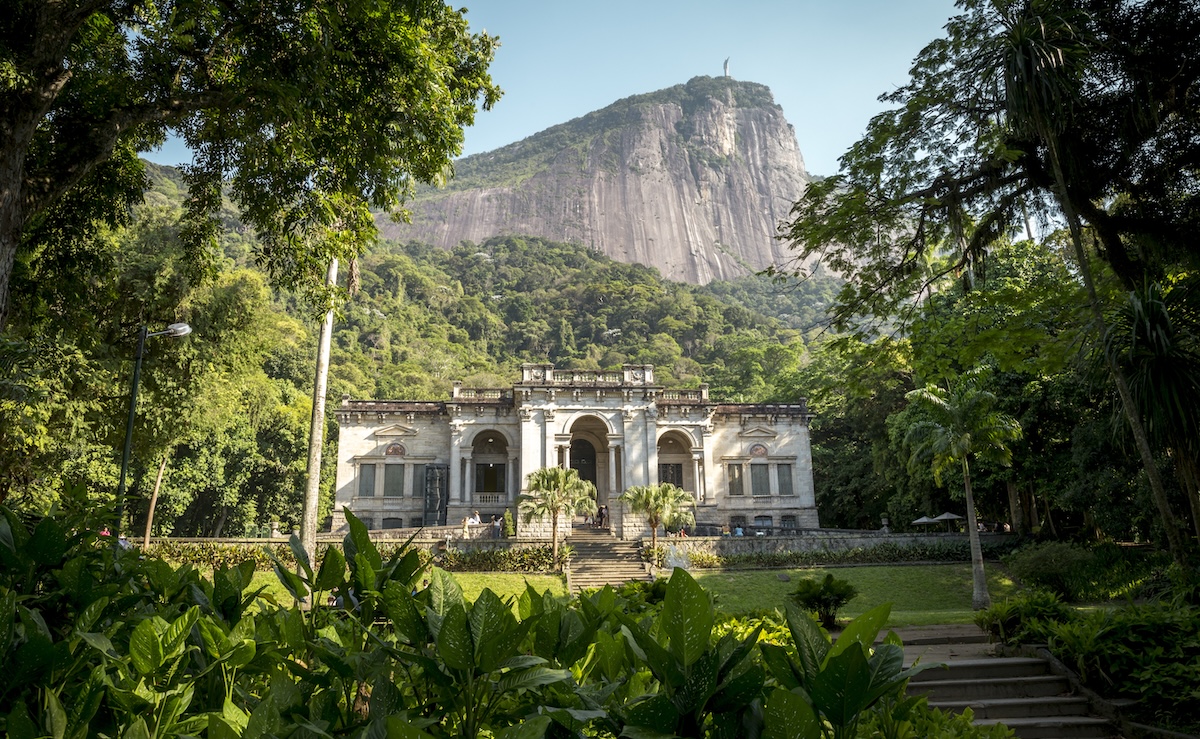
Tucked at the base of Corcovado Mountain, Parque Lage is a hidden gem in Rio. The centerpiece is a gorgeous 1800s mansion that’s now an art school. Trails wind through thick Atlantic rainforest, right in the city.
The gardens feel peaceful and almost far from urban life, even though you’re still in Rio. Grab coffee at the café in the mansion’s courtyard and look up at Christ the Redeemer on the mountain above.
If you’re up for it, hiking trails start here and head toward the famous statue. The park stays open and free to the public. Locals treat it like their own green hideaway, mixing art, nature, and history in one spot.
19. Nara Park, Nara
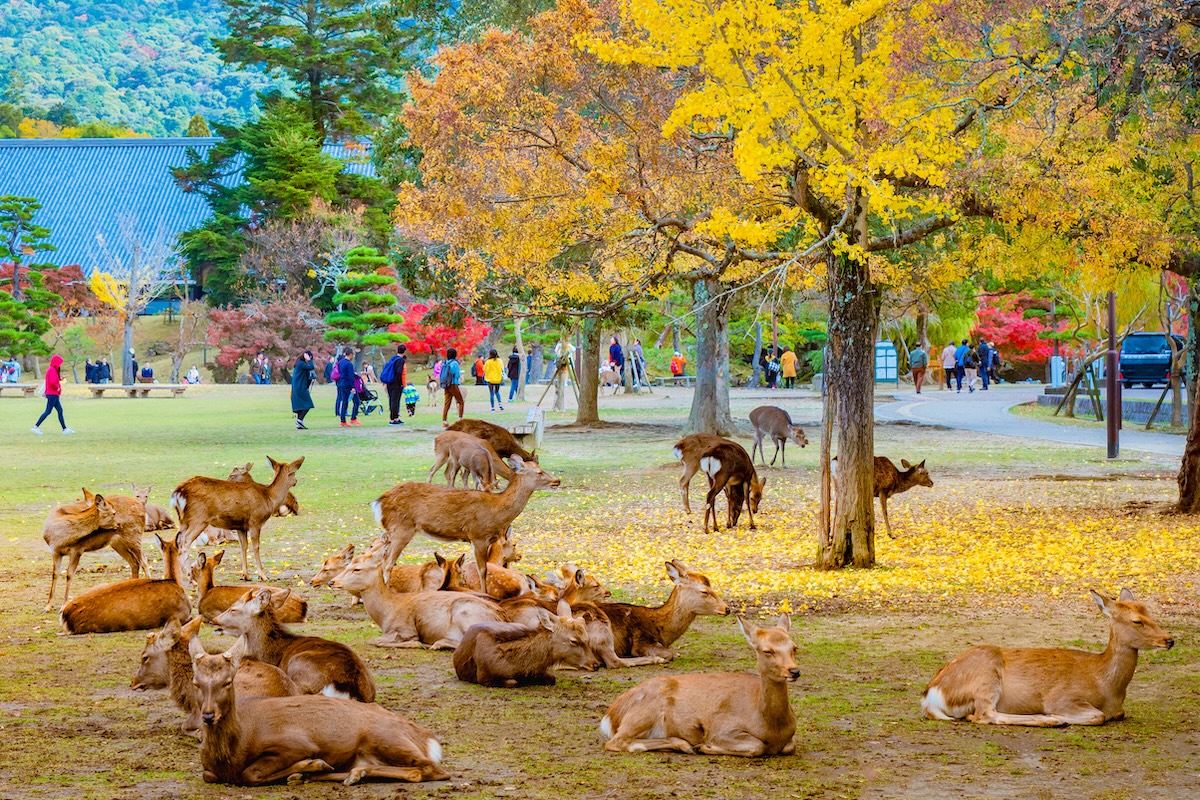
Over 1,300 wild deer roam this huge park, which covers 500 hectares in the middle of Nara city. The deer aren’t fenced in—they wander among temples, paths, and crowds of tourists.
The park opened in 1880 at the base of Mount Wakakusa. You can buy special crackers to feed the deer, who sometimes bow to ask for a snack. Some will even follow you until you give in.
Besides the famous deer, you’ll find historic temples like Todaiji scattered around. The whole place blends nature and centuries-old Japanese history in a way that’s pretty unexpected for an urban park. You can walk straight from downtown Nara into this green space, with deer crossing busy roads alongside everyone else.
18. Griffith Park, Los Angeles
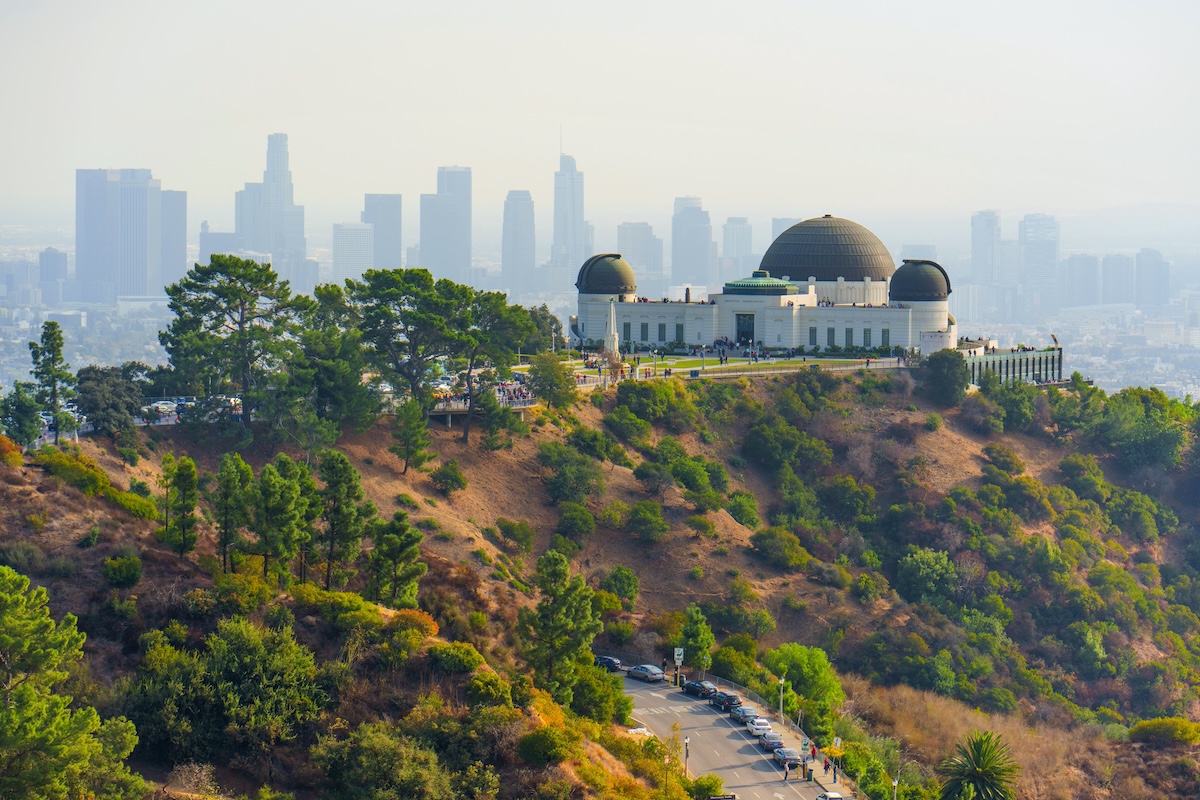
It sounds impossible, but Griffith Park really does sprawl over 4,200 acres in Los Angeles—making it one of the largest urban parks in the U.S.
The park sits at the eastern end of the Santa Monica Mountains, with elevations from 384 to 1,625 feet above sea level. As you explore, you’ll find rugged canyons and hills that feel wild, even with the city all around. Griffith Park stands out because it mixes chaparral wilderness with urban LA. You can hike mountain trails or picnic in grassy areas, all without leaving the city.
The park’s home to Griffith Observatory, with its views of the Hollywood Sign. There’s also the LA Zoo, miles of hiking trails, and plenty of picnic spots. It’s a real escape from the city’s buzz.
17. Chapultepec Park, Mexico City
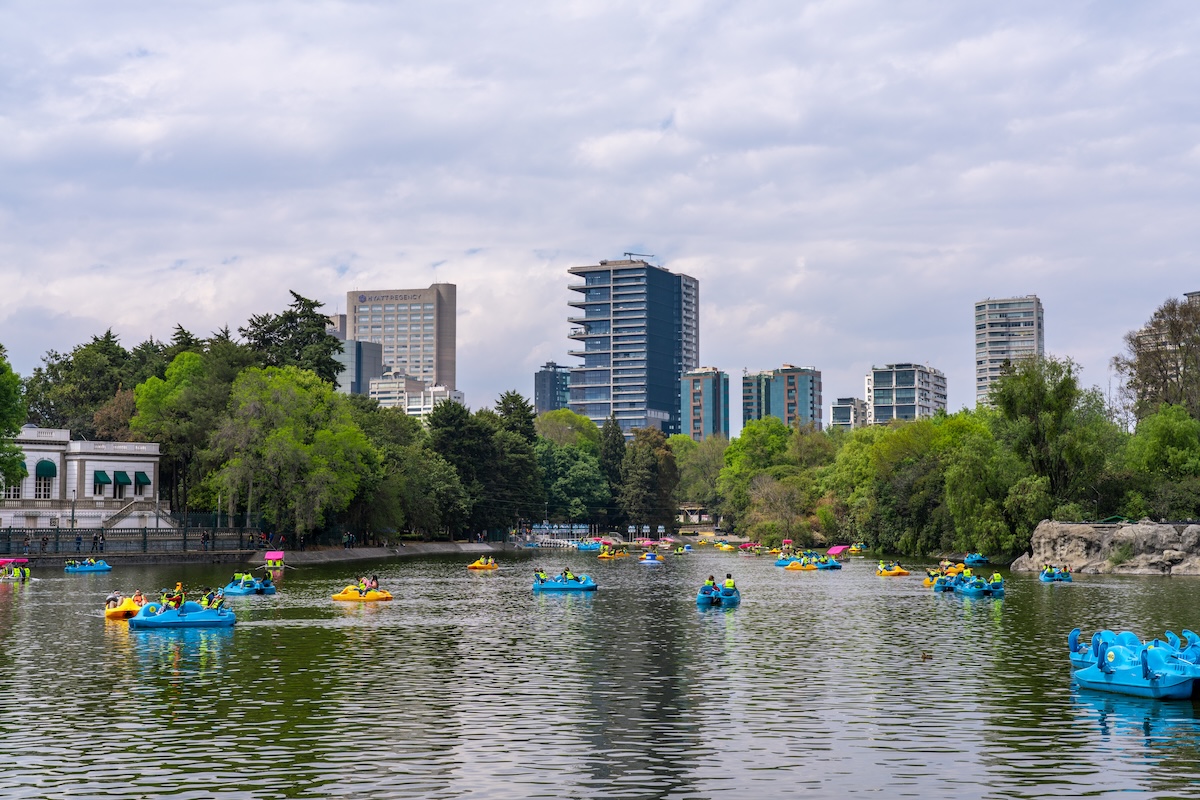
One of the world’s biggest urban parks sits right in Mexico City’s heart. Chapultepec Park covers more than 2,000 acres—twice the size of Central Park in New York.
This place isn’t just huge. It’s packed with attractions that could fill days. You can explore Chapultepec Castle on a hill, visit museums like the National Museum of Anthropology, or paddle across quiet lakes.
The park gives Mexico City a massive green lung, a place to get away from the endless traffic. You’ll walk through forest, spot wildlife, and wander botanical gardens. Families picnic here on weekends, while joggers and cyclists use the paths every day. It blends nature with Mexican history and culture in a way that’s totally unique to the city.
16. Vondelpark, Amsterdam
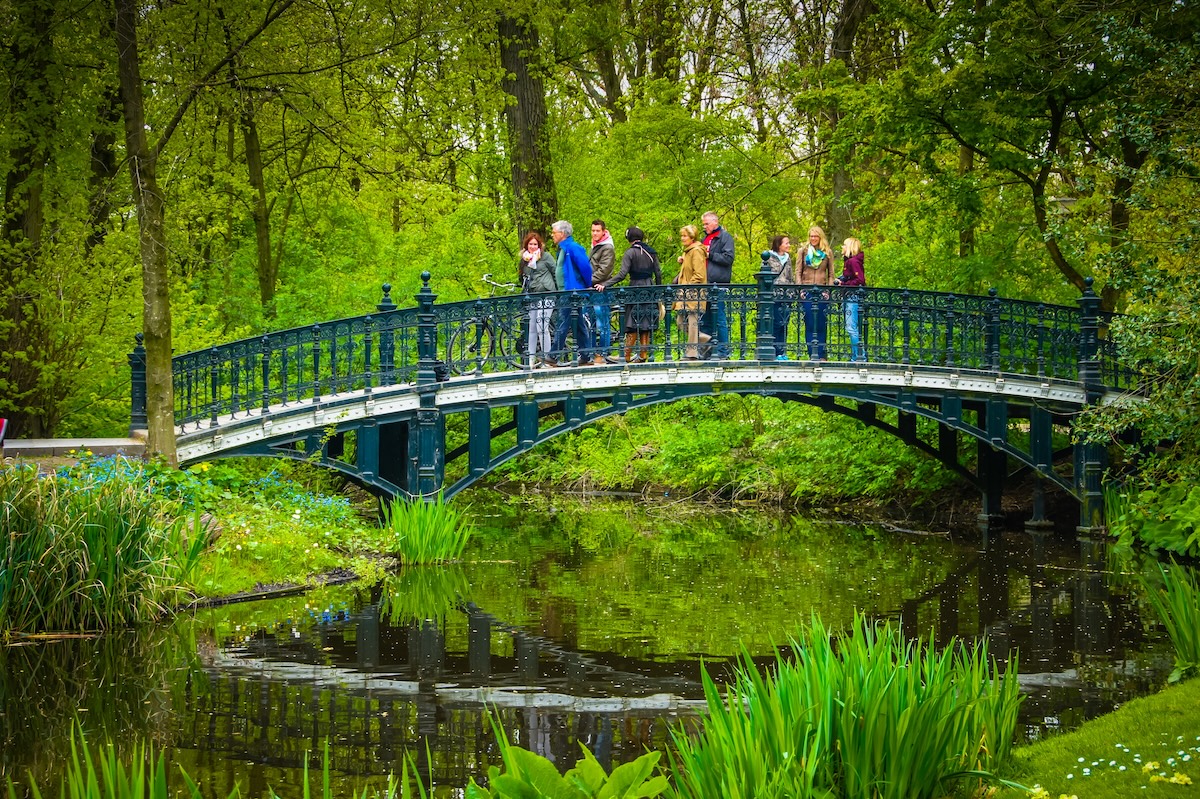
One of Europe’s favorite green spaces sits right in Amsterdam’s center. Vondelpark covers 120 acres and opened in 1865.
It started as Nieuwe Park—just “New Park”—but locals renamed it for Joost van den Vondel, a Dutch playwright from the 1600s. When you visit, you can do almost anything. People jog, picnic, and catch street performers at the open-air theatre. Locals walk dogs, and tourists rent bikes to cruise the winding trails.
The park has ponds, flowerbeds, and big lawns where people sprawl on sunny days. It’s kind of amazing that a park this big exists in such a busy city, but Amsterdam made it work.
15. Villa Borghese Gardens, Rome
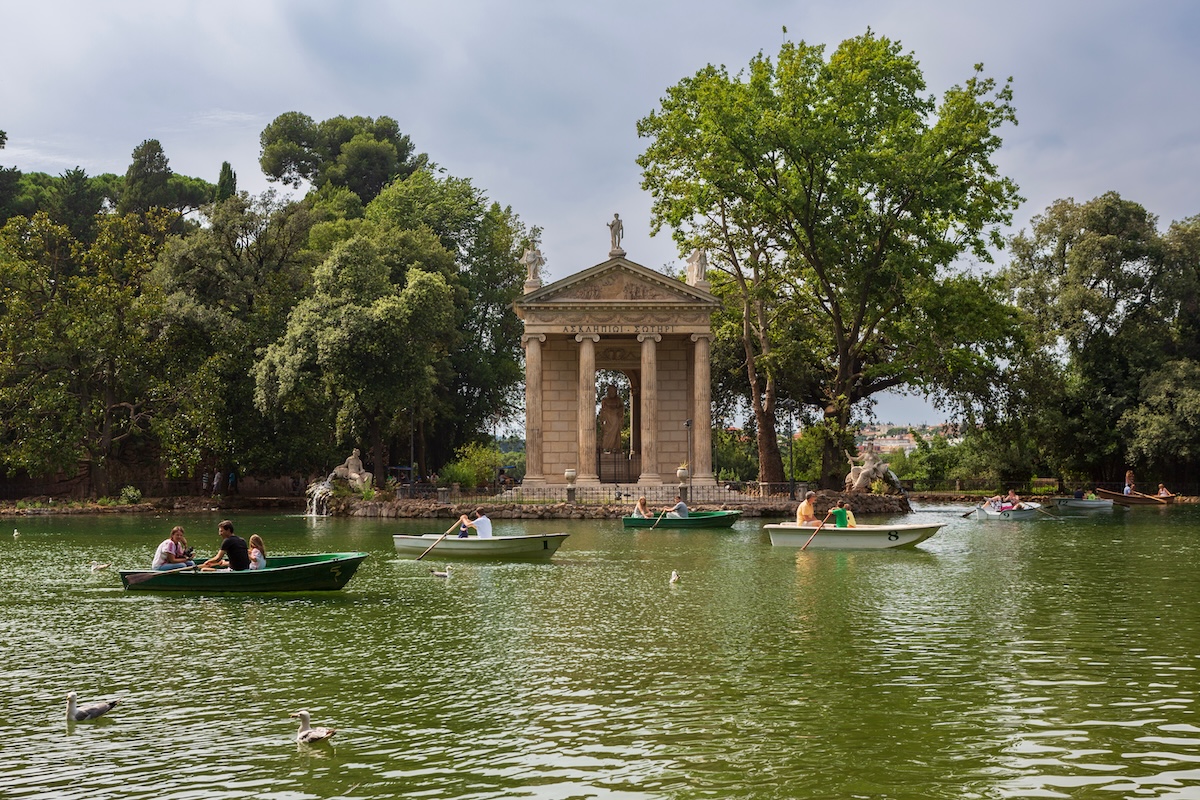
Villa Borghese is one of Rome’s best surprises, right in the city center. It spans over 200 acres, making it Rome’s third-largest public park.
Cardinal Scipione Borghese created it in the 1600s as his private estate. Now it’s open for everyone, any day. The park stretches between Piazza del Popolo and Via Veneto, offering a huge breath of fresh air. You can stroll tree-lined paths, visit museums like the Borghese Gallery, or just relax on the grass.
What sets this park apart is the mix of nature and culture. You’ll find art galleries, gardens, and even a zoo—all in one spot. It’s honestly hard to believe such a huge green space exists right in the middle of Rome’s ancient streets.
14. Kings Park, Perth
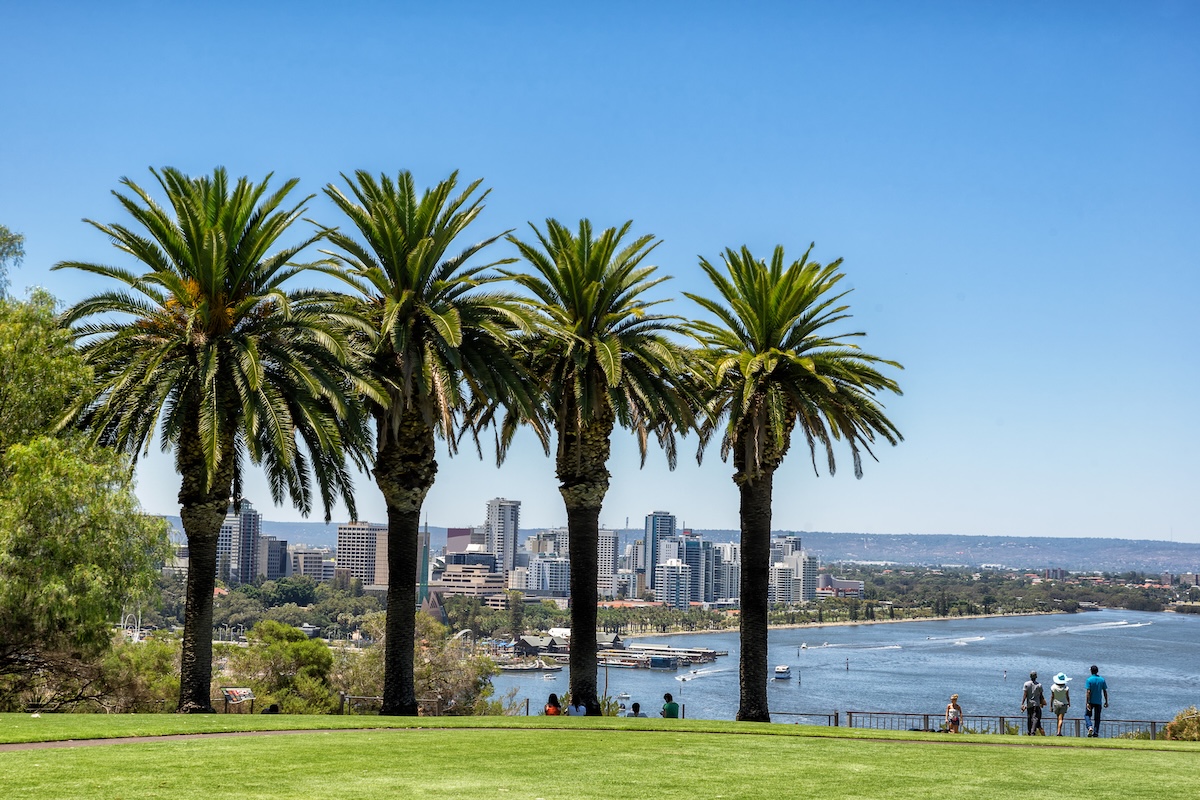
Right in the middle of Perth, Australia, you’ll stumble onto one of the world’s largest inner-city parks. Kings Park covers 400 hectares of bushland, gardens, and green space just steps from downtown.
The park sits on Mount Eliza and gives you amazing views of the Swan River and Perth’s skyline. Walk through the Western Australian Botanic Garden and you’ll see over 3,000 native plant species—some trees have been here for 2,000 years.
Nearly 6 million people visit each year to picnic, hike the trails, or just relax in the gardens. Kids run wild on playgrounds, and you can grab a bite at one of the cafes. There’s even a suspended bridge that lets you stroll through the treetops. It’s kind of wild that such a huge natural area sits right in the heart of a major city.
13. Millennium Park, Chicago
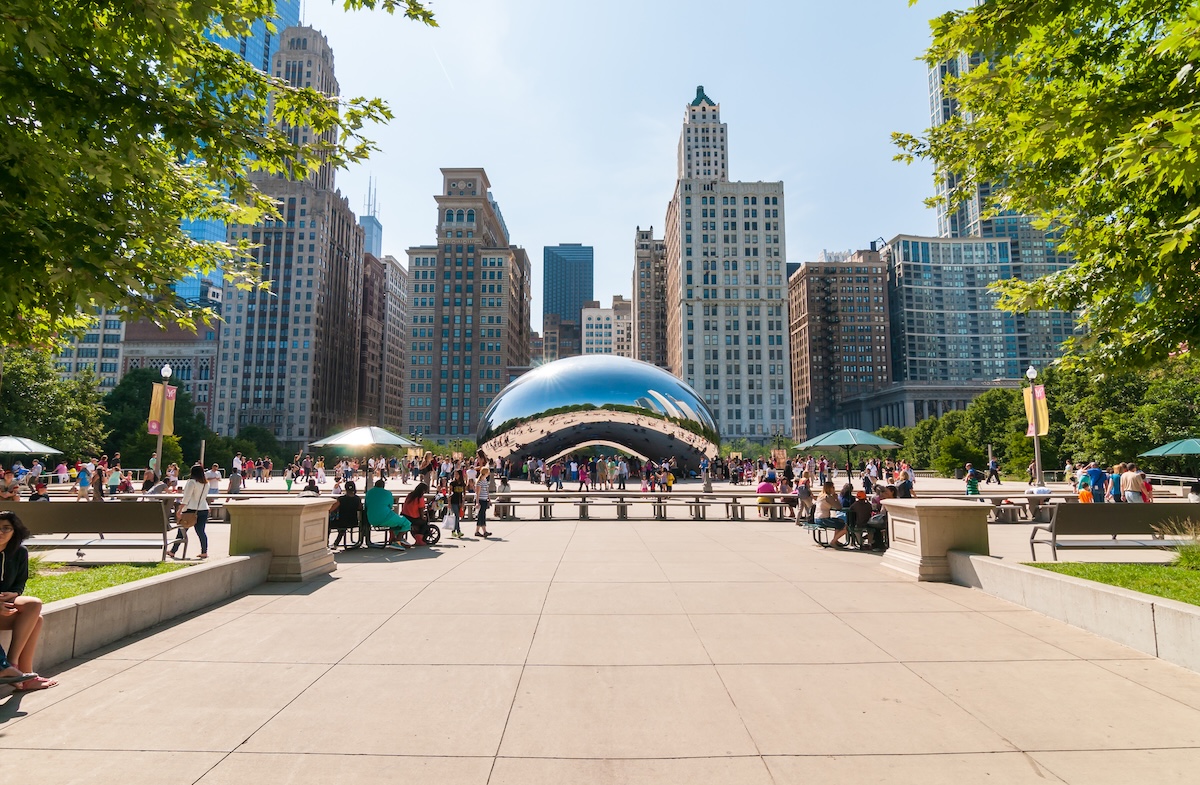
It’s hard to believe one of America’s coolest urban parks sits right on top of parking garages and train tracks. Millennium Park opened in 2004 where old rail yards used to be, and now it’s a 24.5-acre green space in downtown Chicago’s Loop district.
The park mixes modern art, architecture, and landscape design in ways that feel fresh and unexpected. Check out the famous Cloud Gate sculpture (locals call it “The Bean”), catch free concerts, or just hang out on the lawn.
What really blows people’s minds is that this whole place is a massive green roof covering commuter rails and parking below. It draws millions each year and has completely changed how people see downtown Chicago. You’ll find it near Lake Michigan’s shoreline, where city and nature blend in a way that just works.
12. Ibirapuera Park, São Paulo
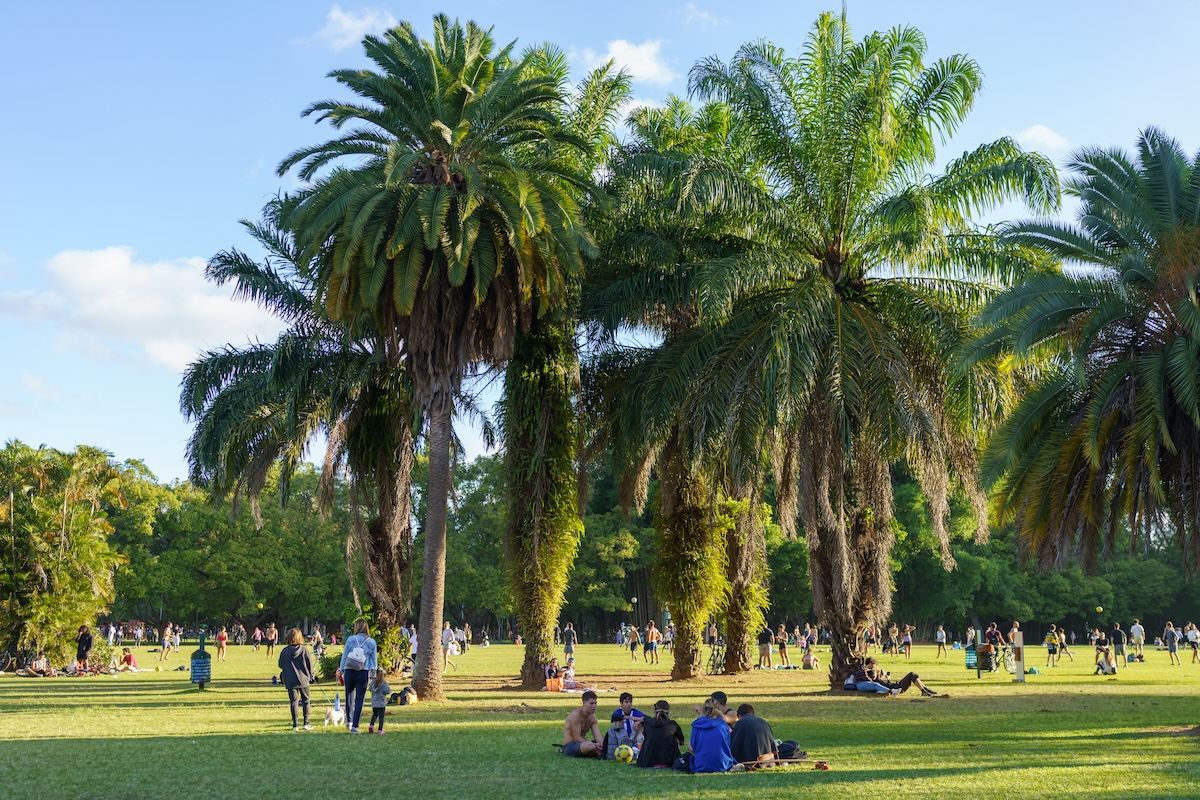
In the middle of São Paulo’s concrete jungle, Ibirapuera Park sprawls across 390 acres—a massive green escape without leaving the city.
The park opened in 1954 and pulls in over 14 million visitors each year. Joggers use five different running paths, and you can check out museums designed by Oscar Niemeyer, or just chill under old trees by the lakes.
What makes this place special is how it balances nature with culture. You see the city skyline from almost anywhere, but you’re still surrounded by native plants and shady spots. There are yoga classes, bike paths, art galleries, and courts for sports.
When locals need a break from the chaos, this is where they go.
11. Schönbrunn Palace Gardens, Vienna
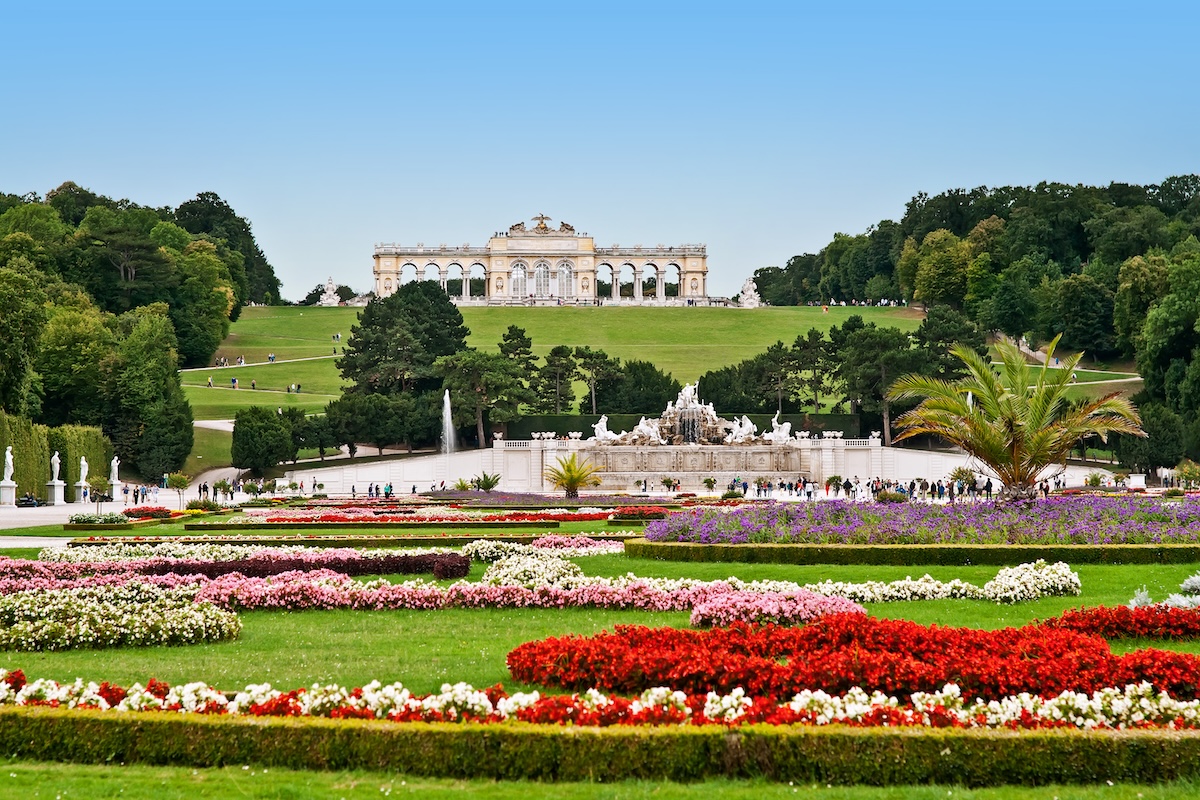
You might expect a 400-acre Baroque garden to be out in the countryside, but this UNESCO World Heritage site sits right in Vienna. The palace grounds open daily at 6:30 am, and entry to the gardens is completely free.
The gardens feature perfectly maintained paths, fountains, and sculptures dating back to the Habsburg dynasty. Climb up to the Gloriette monument for sweeping views of the city or wander over to the world’s oldest zoo, which sits right on the property. If you get there early, you have most of the grounds to yourself before the palace tours begin. It’s the best time to snap photos without crowds blocking your view of the palace.
Locals use the park for jogging and relaxing, treating this imperial estate like their neighborhood green space.
10. Golden Gate Park
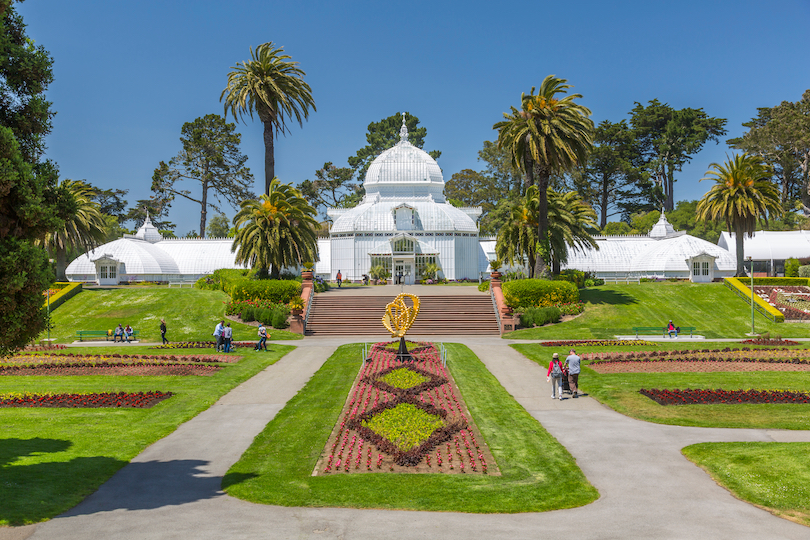
Visiting Golden Gate Park ranks high on visitor’s must-do list, along with riding a cable car, when they come to San Francisco. This urban park, once just sand dunes, has something for everyone: trails, gardens, playgrounds, picnic areas, statues, museums, a golf course, Dutch windmill and outstanding scenery, to name a few features. The park also is an event venue as well. It’s no wonder 13 million people visit the park every year.
The park stretches from the middle of the city all the way to the Pacific Ocean. You could honestly spend an entire day here and still not see everything.
9. Parc Guëll
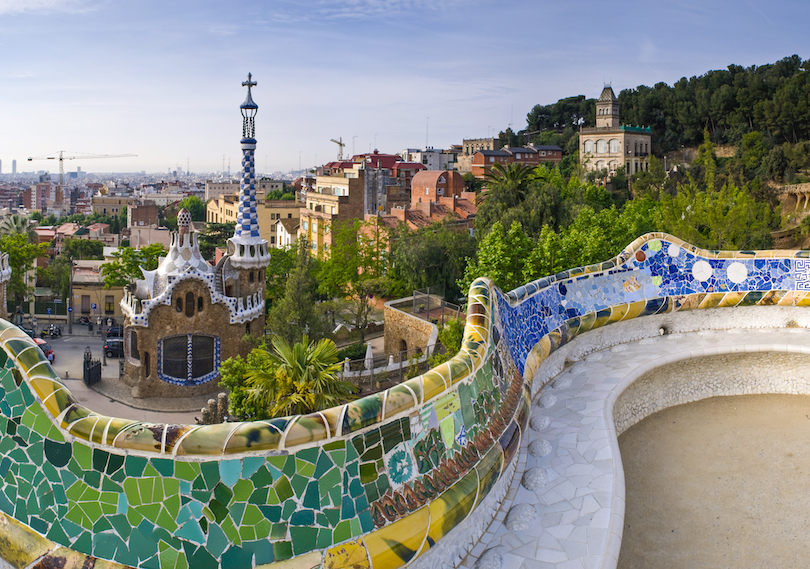
Parc Guëll in Barcelona is a thinking person’s park. The area was originally meant to be a residential property development with Gaudi doing much of the planning and landscape design.
Only two houses were built and the land was later sold to the city of Barcelona and turned into a park. It is home to the famous Salamander sculpture, as well as other buildings and structures designed by the architect. With stunning views of the city, this is a magical experience.
You’re basically walking through Gaudí’s imagination. Every corner reveals another burst of color and some wild shapes that somehow just fit among the trees and paths.
8. Balboa Park
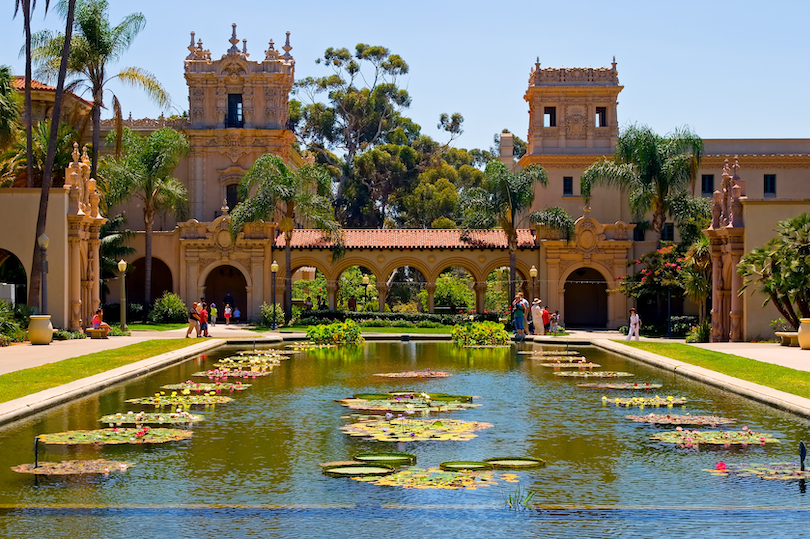
San Diego’s Balboa Park isn’t just another park. It has plenty of green space, flora and fauna, naturally, but it also contain 15 museums, a carousel, miniature railroad, the renowned San Diego Zoo and the historic Old Globe Theatre, among other attractions.
The list of museums include a couple of art museums while others are devoted to natural history, air and space, science and the famous Museum of Man. Numerous gardens are devoted to native plants, roses, cactus, a veterans memorial and a children’s garden.
The Spanish-style buildings give the park a unique vibe. Here, you get a mix of culture, history, and outdoor fun all in one place.
7. Lumphini Park
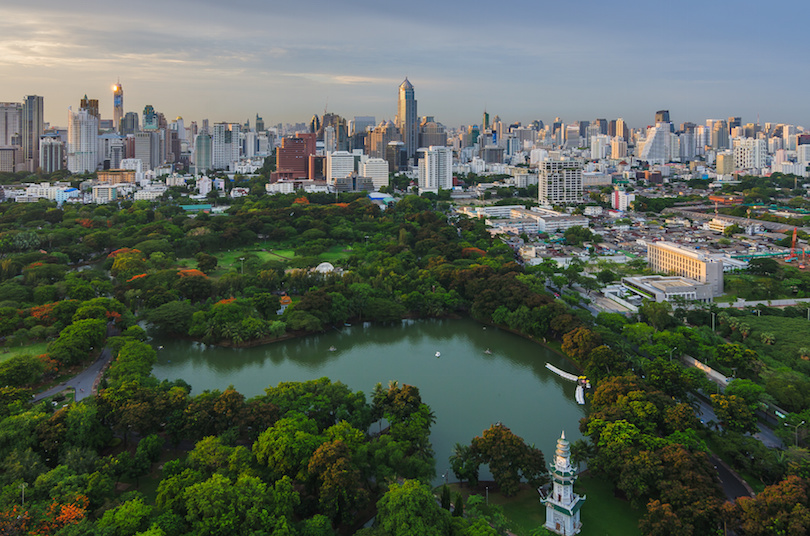
Lumphini Park is more than just an oasis of nature in bustling Bangkok. Originally designed to house Thai crafts and flowers, it is a serene place where people can stroll paths, take a paddle boat ride or just sit and relax and watch others do their morning and evening exercises.
Visitors who stroll along the pond may even come across a water monitor lizard, a crocodile-like reptile. Free outdoor concerts take place on Sunday afternoons.
Locals show up early for tai chi and exercise. The park stays open all day, so it’s easy to drop by whenever you need a breather from Bangkok’s chaos.
6. Englischer Garten
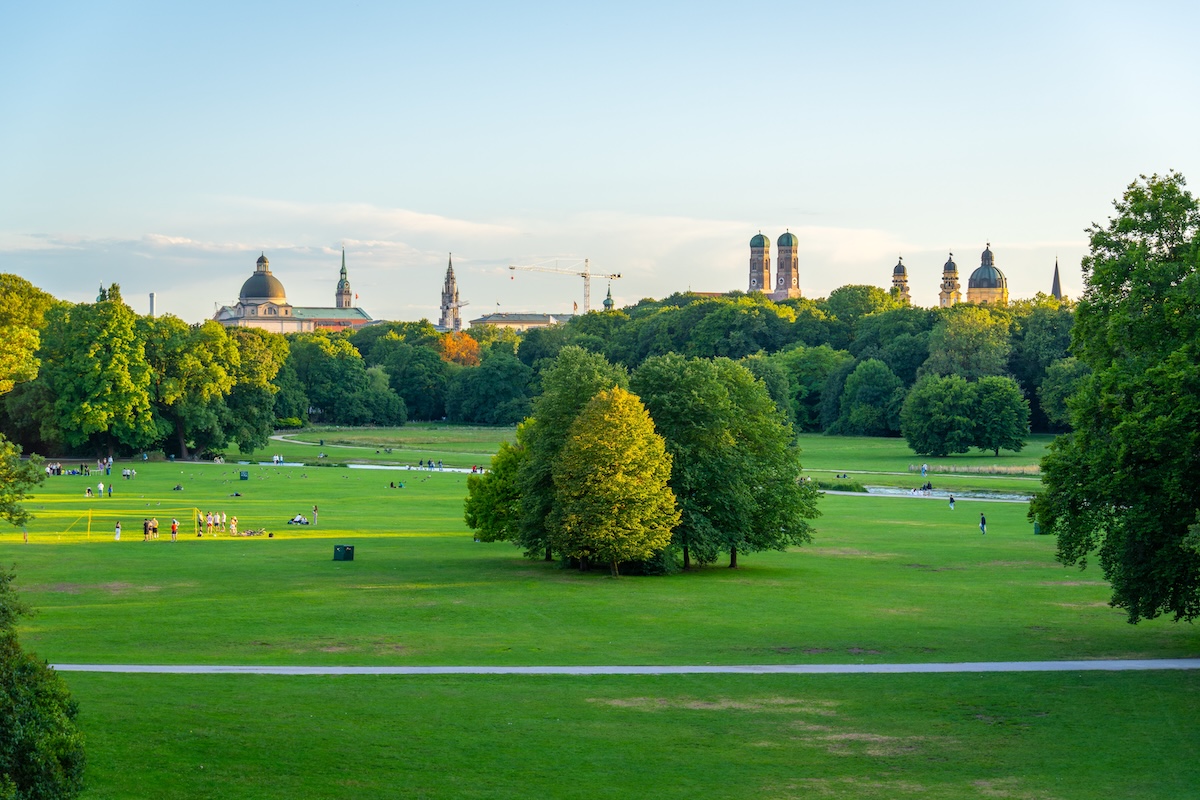
The Englischer Garten in Munich got its name because it’s a little bit of England in Germany; it was patterned after a traditional English garden in 1786. Over the centuries, however, a Japanese teahouse, soccer fields, Chinese pagoda, a 7,000-seat beer garden and many miles of biking and jogging trails have been added. Located on the Isar River, it is one of the world’s biggest urban parks. City views from the top of Monopteros are spectacular.
People even surf a standing river wave here, year-round. You can watch from the banks as surfers take turns riding the wave. Ocean-style surfing in the middle of a German city? You can make it happen in Englischer Garten.
5. Hyde Park
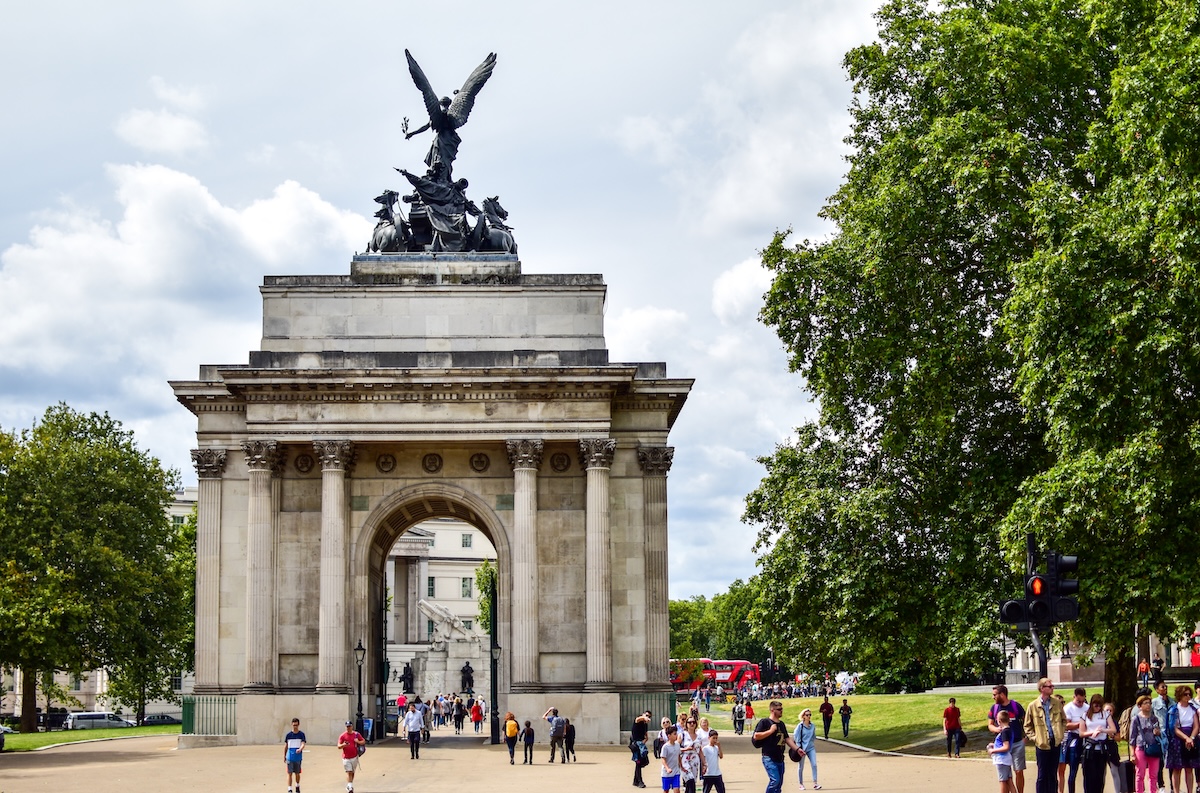
No visit to London is complete without a visit to Hyde Park, one of the city’s largest and most famous parks. It’s famous for demonstrations and the Speaker’s Corner at one end of the park, and the elegantly simple memorial fountain for Princess Diana at the other.
In between, visitors will find paths for walking, jogging or horseback riding, tennis courts, open water swimming, statues and monuments, and boating on the Serpentine on either a pedal boat or the solar shuttle.
Locals call it an “urban forest” because of all the trees. It’s kind of amazing to stand in one of the world’s busiest cities and feel like you’re somewhere completely different.
4. Stanley Park
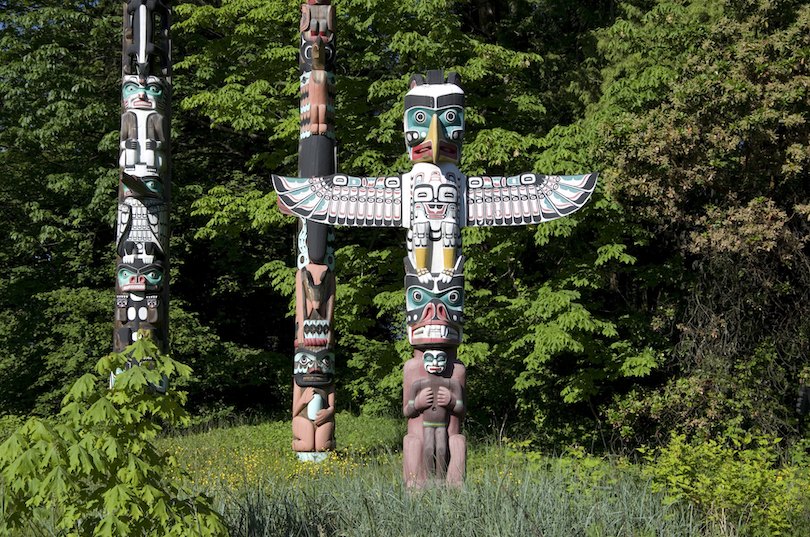
Stanley Park has been delighting generations of Vancouverites since 1888, with its trails through the old-growth forests and along the seawall of Vancouver Harbor. Others stand in awe of the tall totem poles built to honor the indigenous First Nations, who lived on the land long before it became a park.
Over the years, restaurants and an aquarium have been added, but the most-loved park remains otherwise relatively unchanged. You’ll see towering cedars and Douglas firs that have stood for centuries. Be on the lookout for ducks, chipmunks, beaver and maybe even a deer.
3. Ueno Park
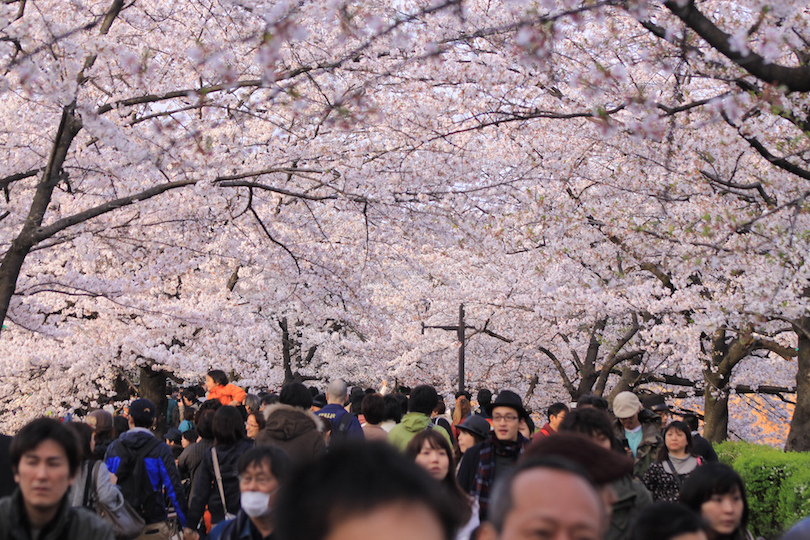
Looking at Ueno Park today, it is hard to imagine that it is built on the site of a magnificent temple that was destroyed by warring factions inside Japan in the 19th century. Today, this urban park sits prettily and serenely in central Tokyo. It is home to several museum’s and Japan’s first zoo. The best time to visit it, however, is in March and April when the park’s more than 1,000 cherry trees are in bloom.
The best time to visit it, however, is in March and April when the park’s more than 1,000 cherry trees are in bloom. During this time the park draws millions for festivals, cultural events, and escapes from Tokyo’s busy streets. You’re just minutes from Ueno Station, so it’s easy to reach this green oasis.
2. Jardin du Luxembourg
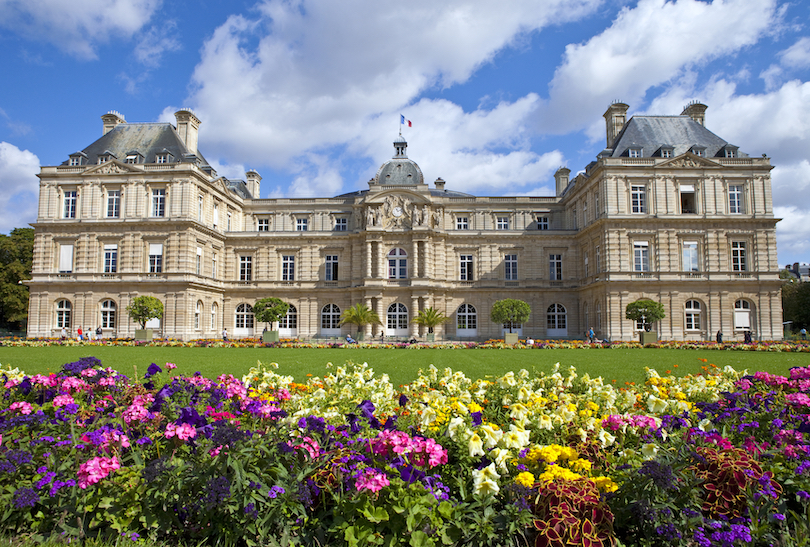
Known in English as the Luxembourg Gardens, this public park is the second largest in Paris. Visitors here can picnic or stroll leisurely among beautiful lawns, formal gardens and fruit orchards that feature many artistic statues and fountains.
For fun and sport, there are jogging paths, tennis courts and fitness equipment. Children can play in the huge playground, ride ponies, watch a puppet show and sail model boats in a pond.
You might hear an orchestra playing near a kiosk, or just enjoy a break from Paris streets without ever really leaving the city.
1. Central Park
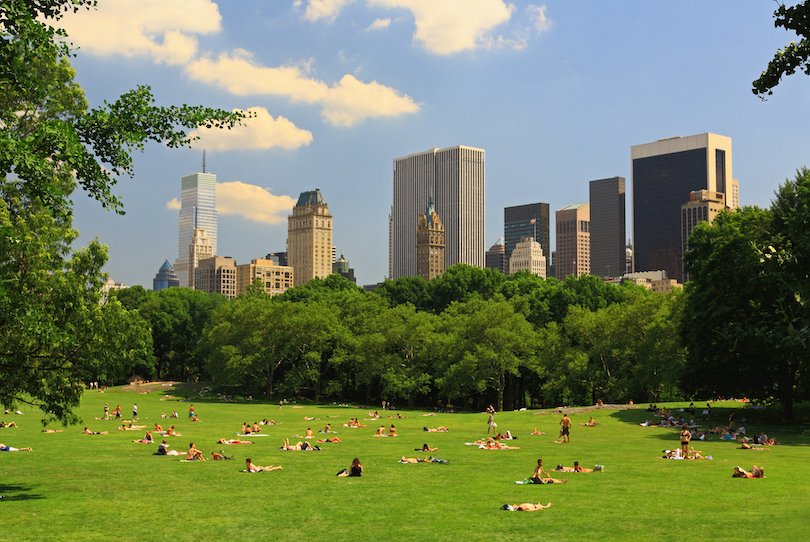
When viewing New York City from the air, Central Park stands out like a sore, or, rather, green thumb. This huge green rectangle in the center of Manhattan, filled with massive trees, lakes and buildings, is surrounded by monotonously colored skyscrapers. Dating back to the 19th century, it is the nation’s first public park, drawing 40 million visitors annually.
The park’s features are mind-boggling; statues, memorials, fountains, lakes for boating, bridges to cross, a castle, walking paths, gorgeous landscaping and more.
You’ll spot the park in all kinds of movies and photos. In 1963, it earned its title as a National Historic Landmark.
King’s Park in Perth is stunning and offers perfect views of Perth. The groundskeepers do an amazing job.